Two years ago, Sergio made a major life shift toward sobriety and intentional rebuilding. He committed to
clarity, discipline, and forward momentum. But even with that commitment, he found himself stuck in a
cycle he couldn't break.
He works full-time as a Senior Agent and Subject Matter Expert at a contact center, handling Tier 3
escalations, coaching frontline agents, and managing complex cases. The work is mentally demanding —
sustained attention, emotional labor, constant problem-solving under pressure.
And then, in the small hours he has left, he tries to build.
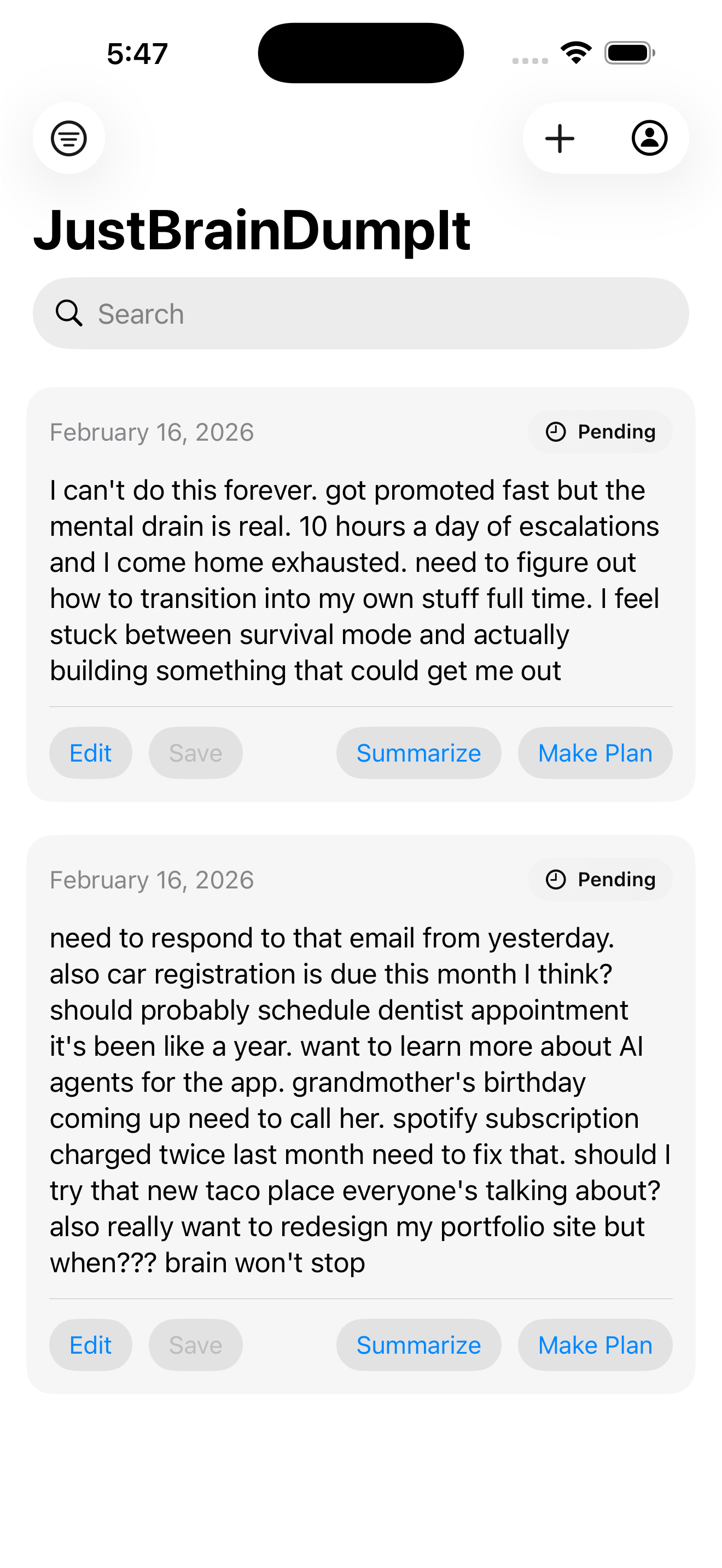
But his mind doesn't stop. Ideas flood in constantly — during calls, in the shower, while driving home. He
thinks of solutions, features, improvements, ways forward. The ideas are good. The problem is, there are
too many of them.
Traditional productivity tools made it worse. They all asked him to do the same thing: organize
immediately. Decide what's important. Set priorities. Choose categories. Pick a system.
But when your brain is already overloaded from a demanding workday, when you're running on limited energy
and stolen hours, deciding becomes one more thing you can't do. The tools that were supposed to help
became another source of pressure. Another thing to maintain. Another system to fail at.
He realized the core problem wasn't laziness or lack of discipline. It was that every productivity tool
assumed you already had clarity — the exact thing people experiencing mental overload don't have.
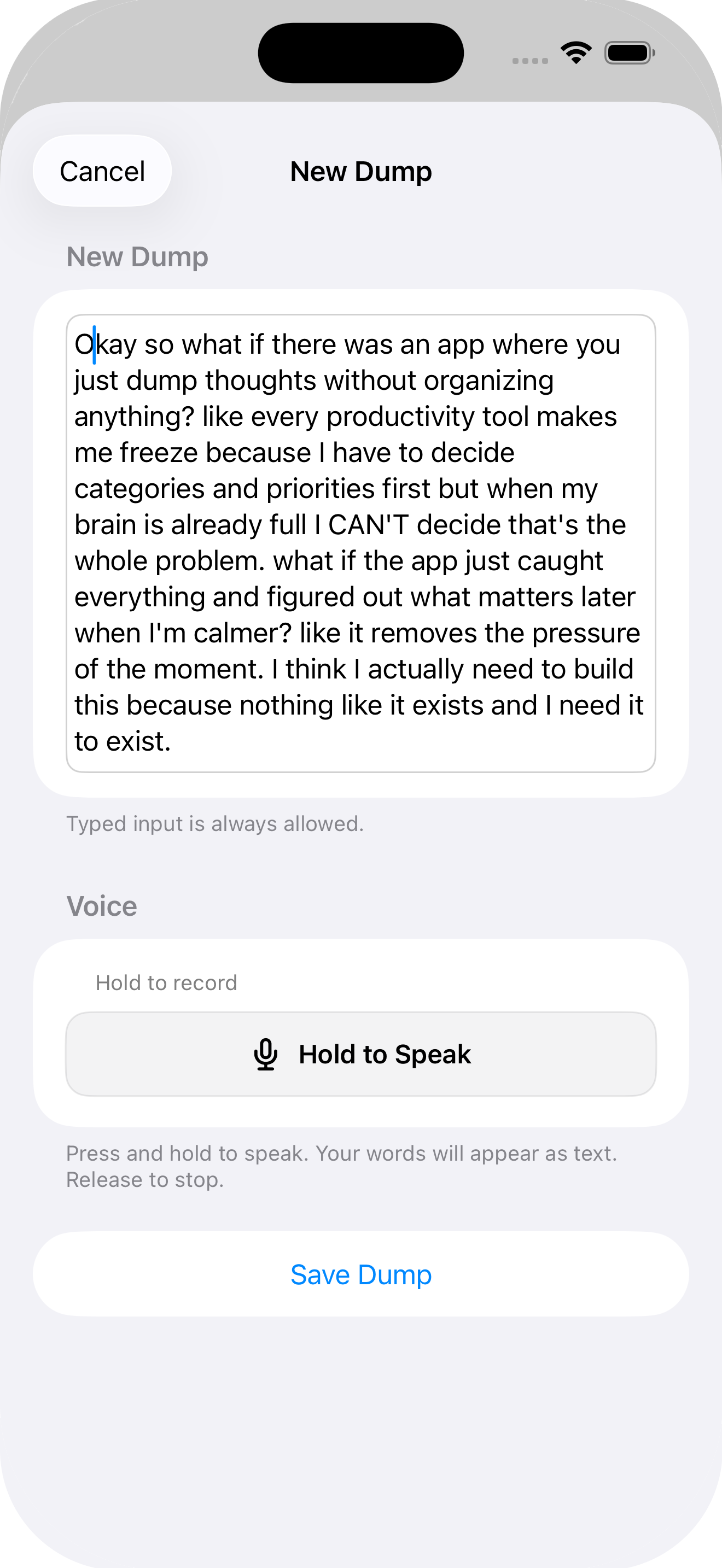
What he needed was something that would hold his thoughts without demanding anything from him first. A
place to release the mental noise safely, without forcing immediate organization. A tool that worked with
how his mind actually functioned under pressure, not against it.
That tool didn't exist.
So he decided to build it.